
Home Service Marketing Guide: The Complete Blueprint for Growing Your Contracting Business
Home Service Marketing Guide
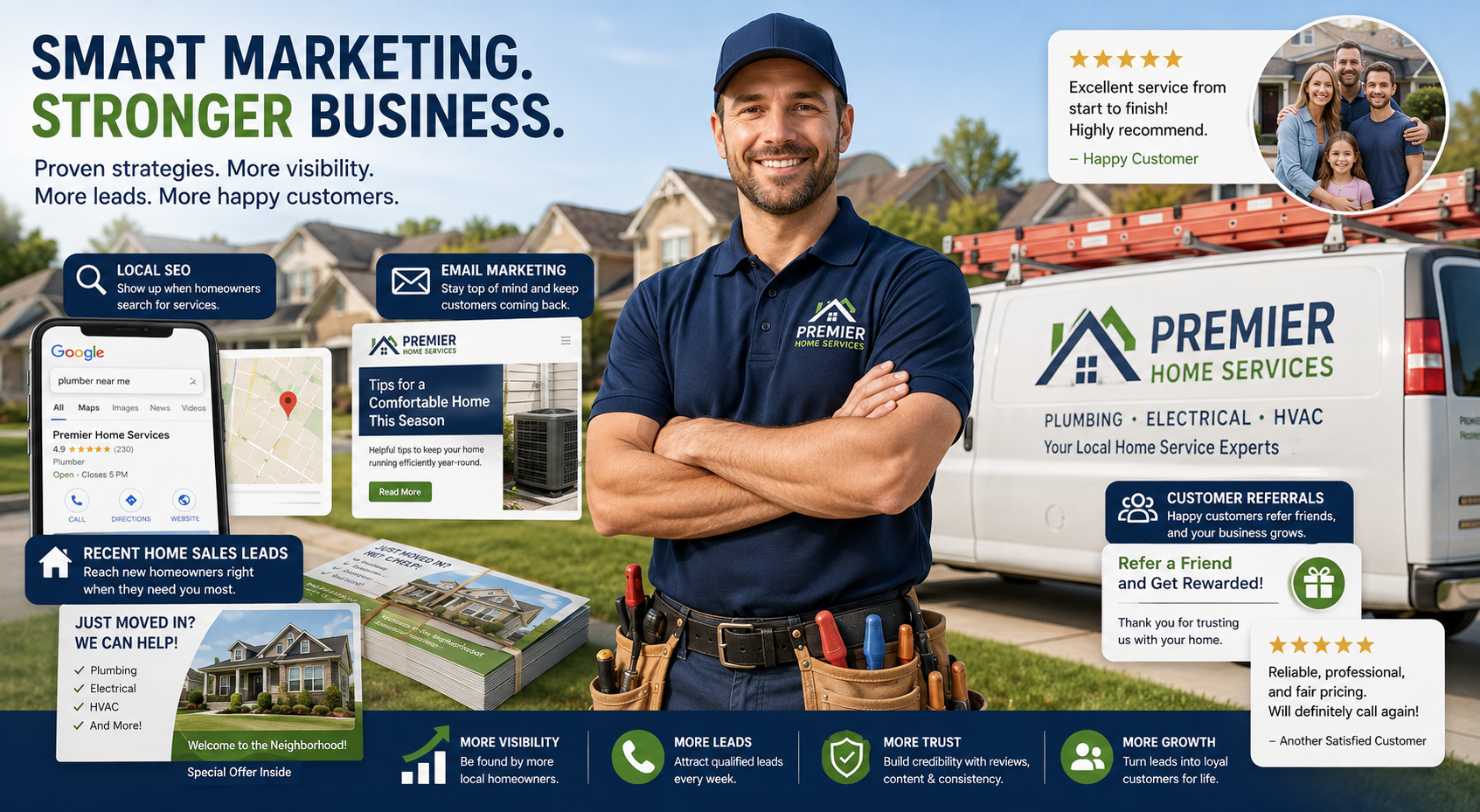
This home service marketing guide explains how contractors can build a stronger marketing system instead of relying on a single source of new business. Growing a successful home service company requires more than providing excellent workmanship. Today’s homeowners have more choices than ever before, and they expect to find trustworthy contractors quickly, whether they’re searching on Google, reading reviews, checking social media, or asking friends for recommendations.
The contractors who consistently grow year after year don’t rely on a single advertising method. Instead, they build a complete marketing system that attracts new customers, earns their trust, delivers exceptional service, and turns satisfied homeowners into repeat customers and referral sources.
This guide brings together the most effective marketing strategies for electricians, plumbers, HVAC companies, roofers, painters, landscapers, pest control companies, cleaning services, pool professionals, and other home service businesses.
Why a Home Service Marketing System Outperforms Individual Tactics
Many contractors try one marketing idea at a time:
- Google Ads
- Facebook Ads
- Direct Mail
- Local SEO
- Yard Signs
- Referrals
Each can work, but none should operate alone.
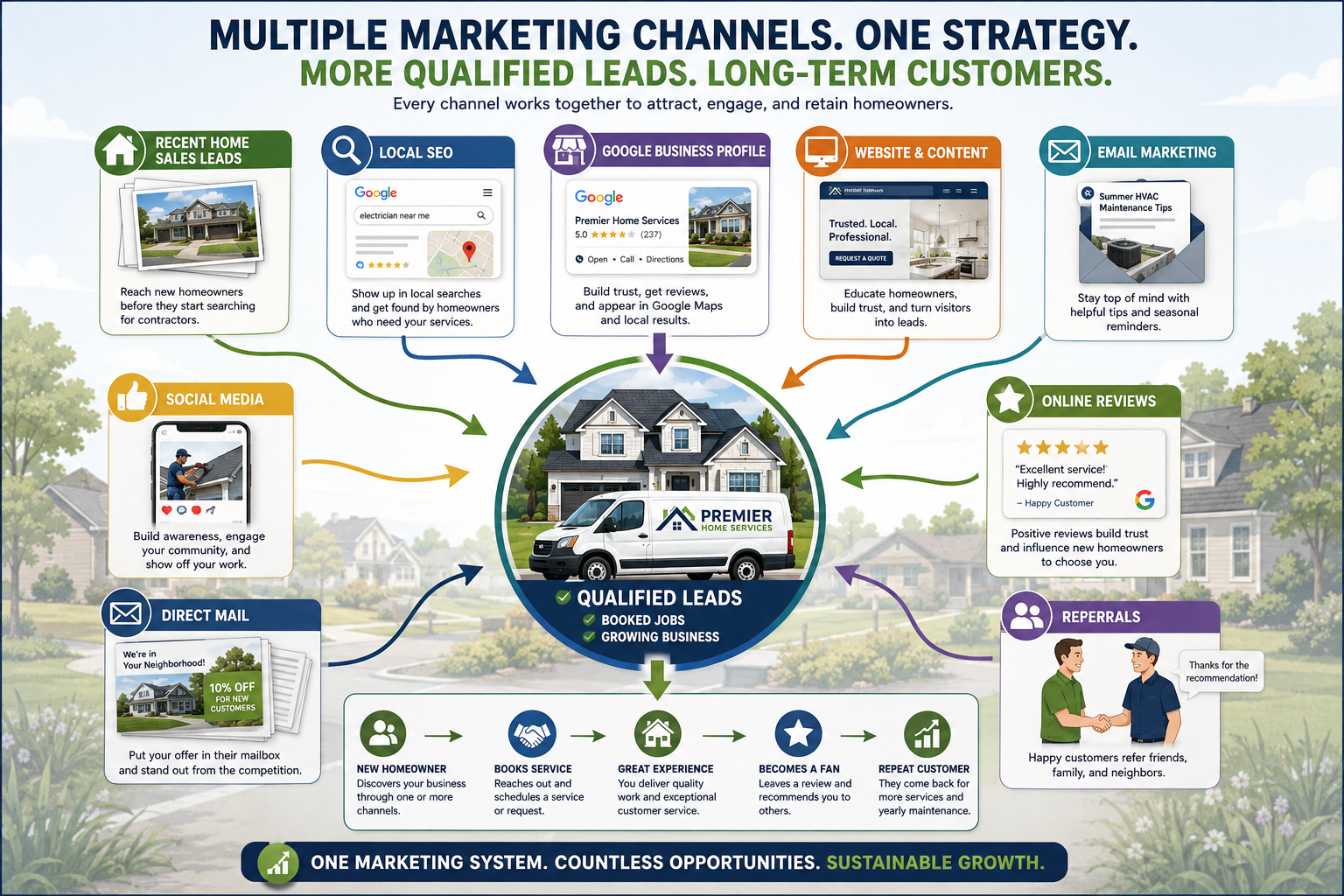
The most successful businesses combine several marketing channels so homeowners encounter the company in multiple places. That repeated exposure builds familiarity, confidence, and trust long before the homeowner makes a phone call.
Step 1: Identify Your Ideal Customer
Before spending money on marketing, define exactly who you want to reach.
Questions to consider include:
- Do you primarily serve homeowners?
- Are you targeting higher-value homes?
- Do you specialize in remodeling, repairs, or maintenance?
- Which neighborhoods generate your best customers?
- Which services produce the highest profits?
Knowing your ideal customer allows every marketing decision to become more focused and more profitable.
Step 2: Reach New Homeowners Early
One of the best opportunities to gain new customers is immediately after someone purchases a home.
New homeowners commonly need:
- Electrical upgrades
- HVAC inspections
- Plumbing repairs
- Pest control
- Landscaping
- House cleaning
- Window coverings
- Security systems
- Pool maintenance
Instead of waiting for them to search for your business months later, proactively introduce your company shortly after they move.
One of the most effective ways to accomplish this is by marketing directly to homeowners soon after they purchase a property. Our Recent Home Sales Leads page explains how contractors can consistently reach new homeowners during one of the busiest periods for home improvements and maintenance.
For a broader strategy that combines new homeowner outreach with direct mail, local SEO, reviews, referrals, and customer follow-up, read our Home Contractor Marketing guide.
Step 3: Build a Strong Local SEO Foundation
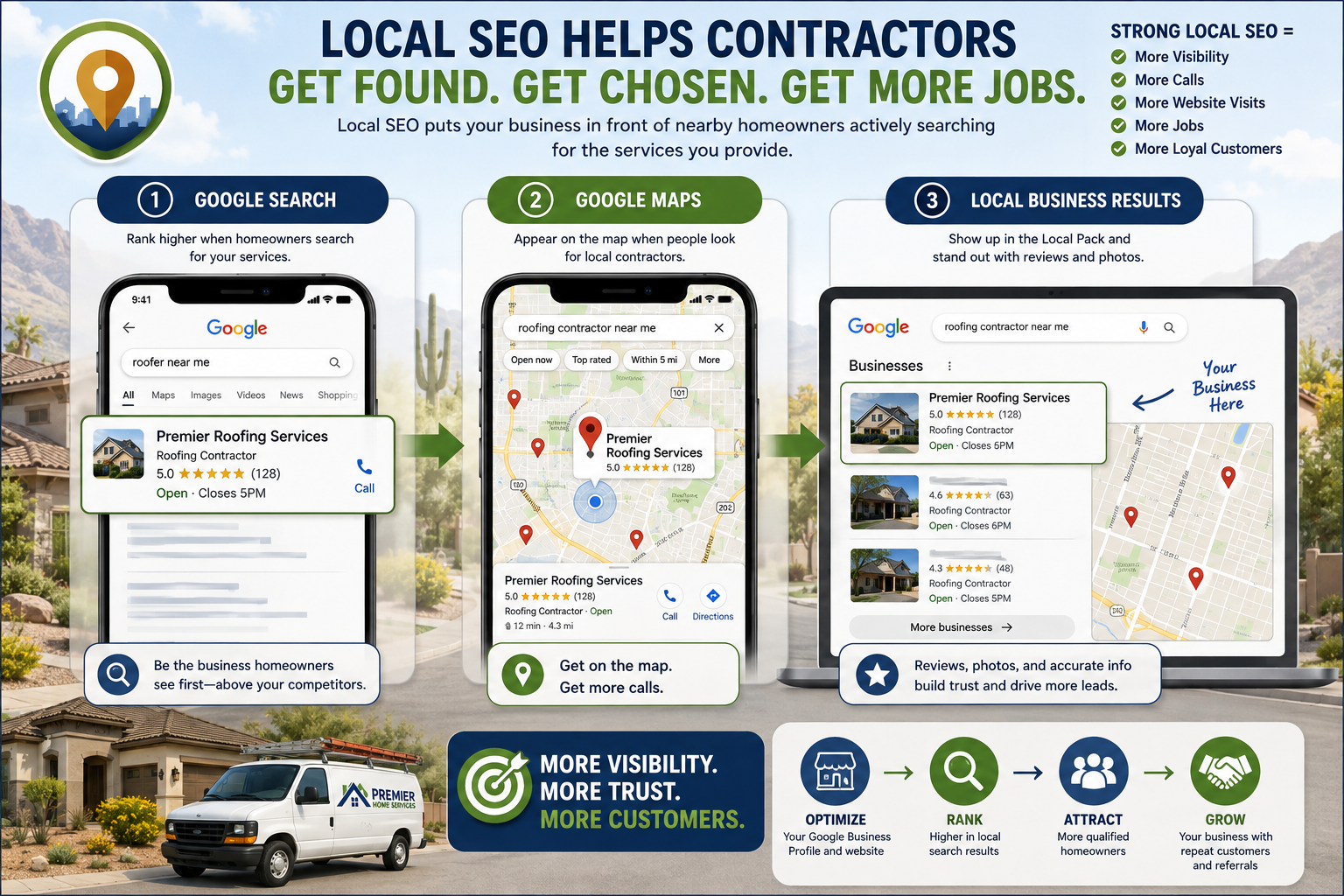
Most homeowners begin with Google.
Your business should be easy to find through:
- Local Search
- Google Maps
- Google Business Profile
- Service Pages
- Helpful Blog Articles
- Customer Reviews
Local SEO is one of the highest-return marketing investments because it continues producing leads long after your content is published.
A strong online presence helps homeowners discover your business exactly when they need your services. Learn how to improve your rankings with our complete Local SEO for Contractors guide.
Step 4: Create a Professional Website
Your website should answer the questions homeowners ask before they call.
Include:
- Individual Service Pages
- Service Area Pages
- Customer Testimonials
- Before-and-After Photos
- Frequently Asked Questions
- Contact Forms
- Fast Loading Pages
- Mobile-Friendly Design
Your website should educate visitors while making it easy to request service.
A well-designed website becomes the foundation that supports every other marketing effort discussed throughout this guide.
Step 5: Publish Helpful Content
Educational articles help homeowners solve problems while demonstrating your expertise.
Consider publishing articles about:
- Seasonal Maintenance
- Home Improvement Ideas
- Safety Tips
- Buying a New Home
- Energy Efficiency
- Preventive Maintenance
Consistent publishing helps search engines recognize your business as a trusted local resource.
Every article also creates another opportunity for homeowners to discover your business through Google while building trust before they ever contact you.
Step 6: Stay Connected with Email Marketing
Most homeowners aren’t ready to buy immediately.
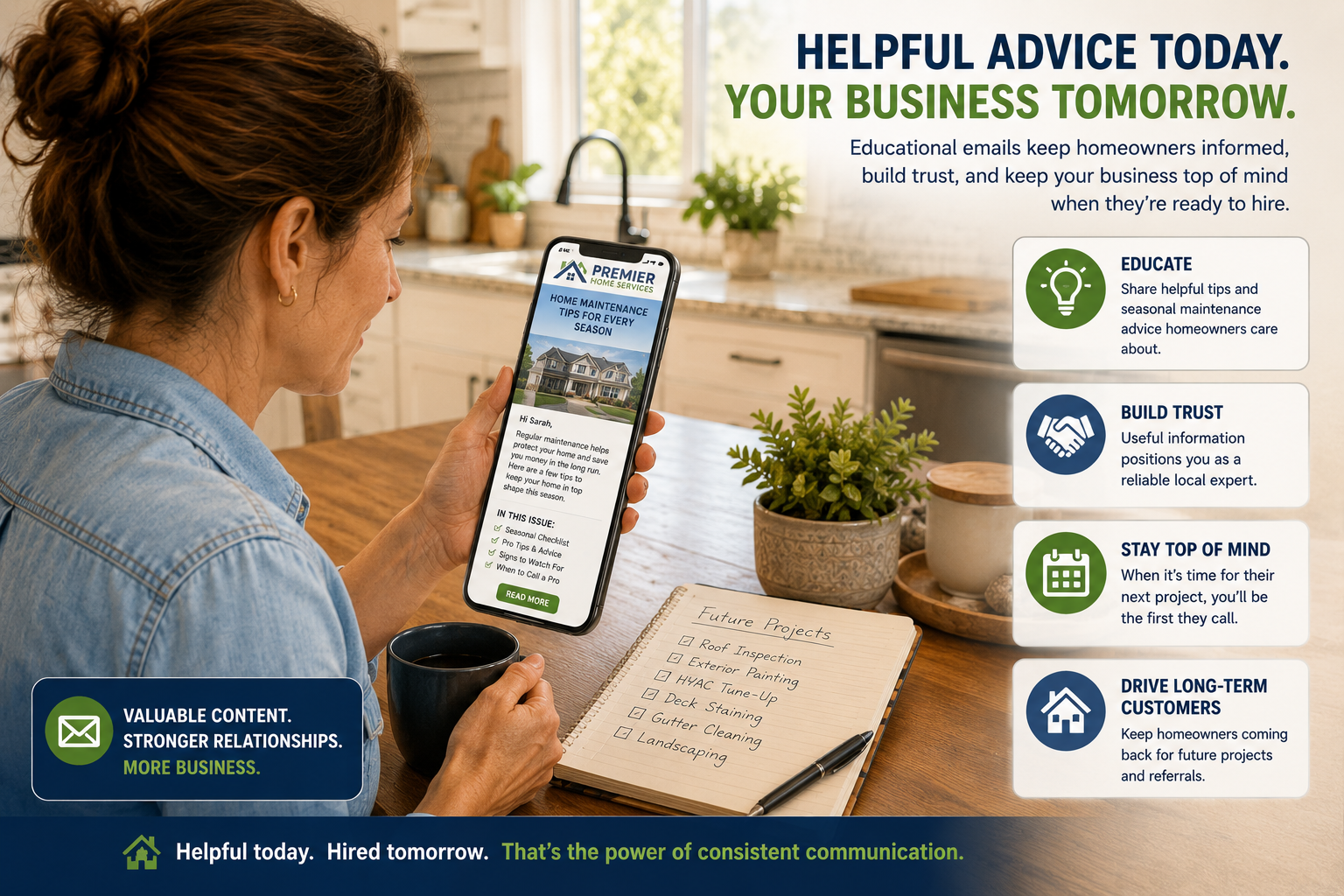
Email marketing helps your business remain top of mind until they need service.
Share:
- Seasonal Reminders
- Maintenance Tips
- Homeowner Checklists
- Special Offers
- Company News
- Educational Articles
Educational email newsletters provide value long after the first visit and encourage repeat business. Our Email Marketing guide explains how contractors build stronger customer relationships through consistent communication.
Step 7: Increase Local Visibility
Marketing doesn’t stop online.
Neighborhood visibility reinforces your brand through:
- Yard Signs
- Direct Mail
- Door Hangers
- Community Sponsorships
- Vehicle Graphics
- Local Events
The more often homeowners see your business, the more likely they are to remember you when service is needed.
Our Neighborhood Marketing guide explains how combining offline marketing with digital marketing creates multiple opportunities for homeowners to recognize and trust your business.
Step 8: Earn Reviews and Referrals
Customer reviews influence purchasing decisions every day.
After every successful job:
- Ask for a review.
- Thank the customer.
- Follow up.
- Stay in touch.
- Encourage referrals.
Excellent service combined with consistent follow-up creates long-term growth.
Positive reviews not only increase trust with homeowners but also improve your visibility in local search results.
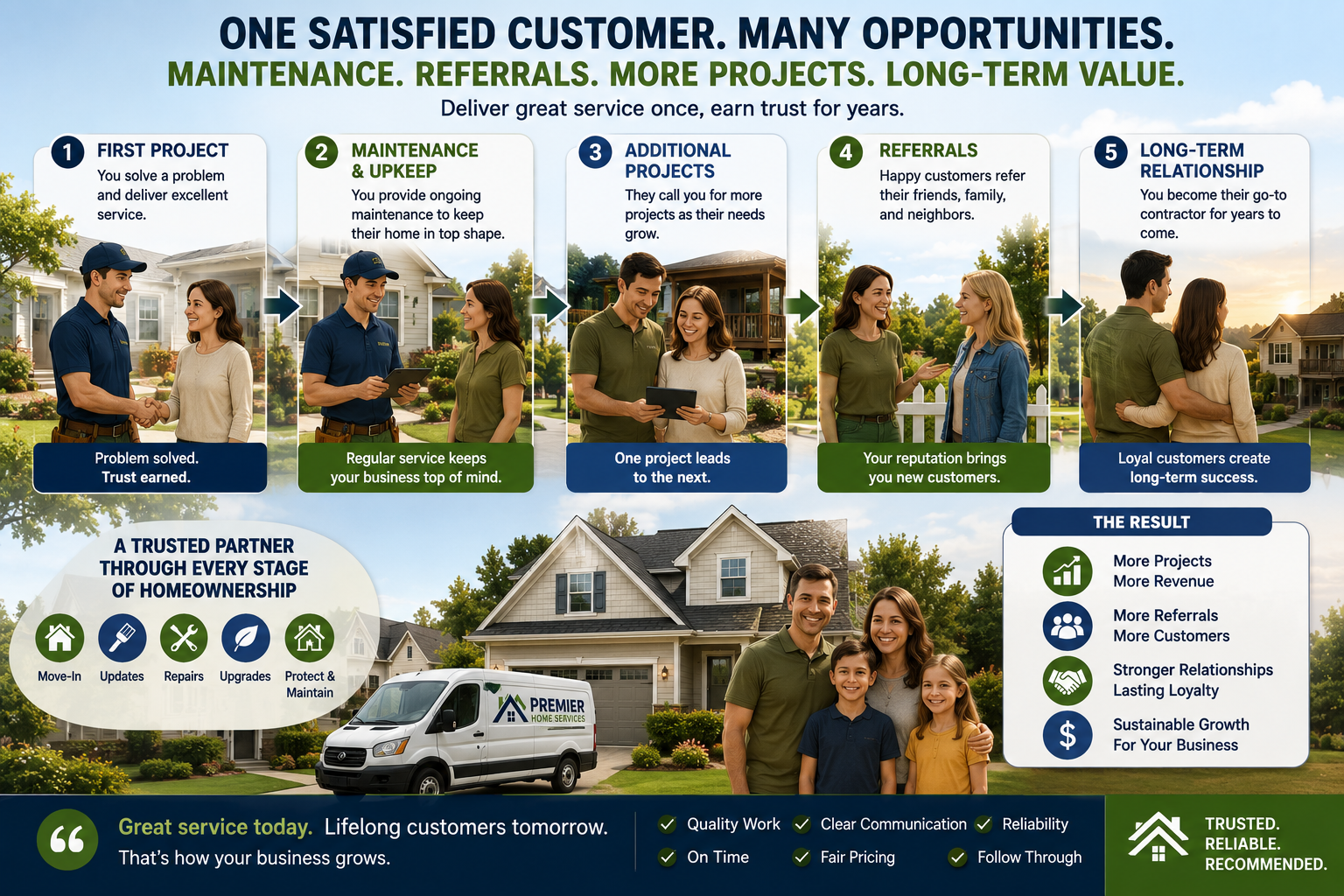
Step 9: Focus on Customer Lifetime Value
The first sale is only the beginning.
Long-term customers often purchase:
- Additional Services
- Maintenance Plans
- Upgrades
- Emergency Repairs
- Seasonal Services
They also become valuable referral sources.
Increasing the value of existing customers is often less expensive than acquiring new ones.
Our Customer Lifetime Value guide explains how repeat business, referrals, maintenance programs, and ongoing communication can dramatically increase the profitability of every customer you acquire.
Step 10: Measure Your Results
Successful contractors track performance.
Monitor:
- Website Traffic
- Phone Calls
- Quote Requests
- Conversion Rates
- Email Engagement
- Search Rankings
- Cost Per Lead
- Customer Acquisition Cost
Tracking your results helps you improve your marketing and invest where you receive the greatest return.
Our Marketing ROI guide explains how to measure every marketing dollar so you can confidently invest in the strategies producing the highest return.
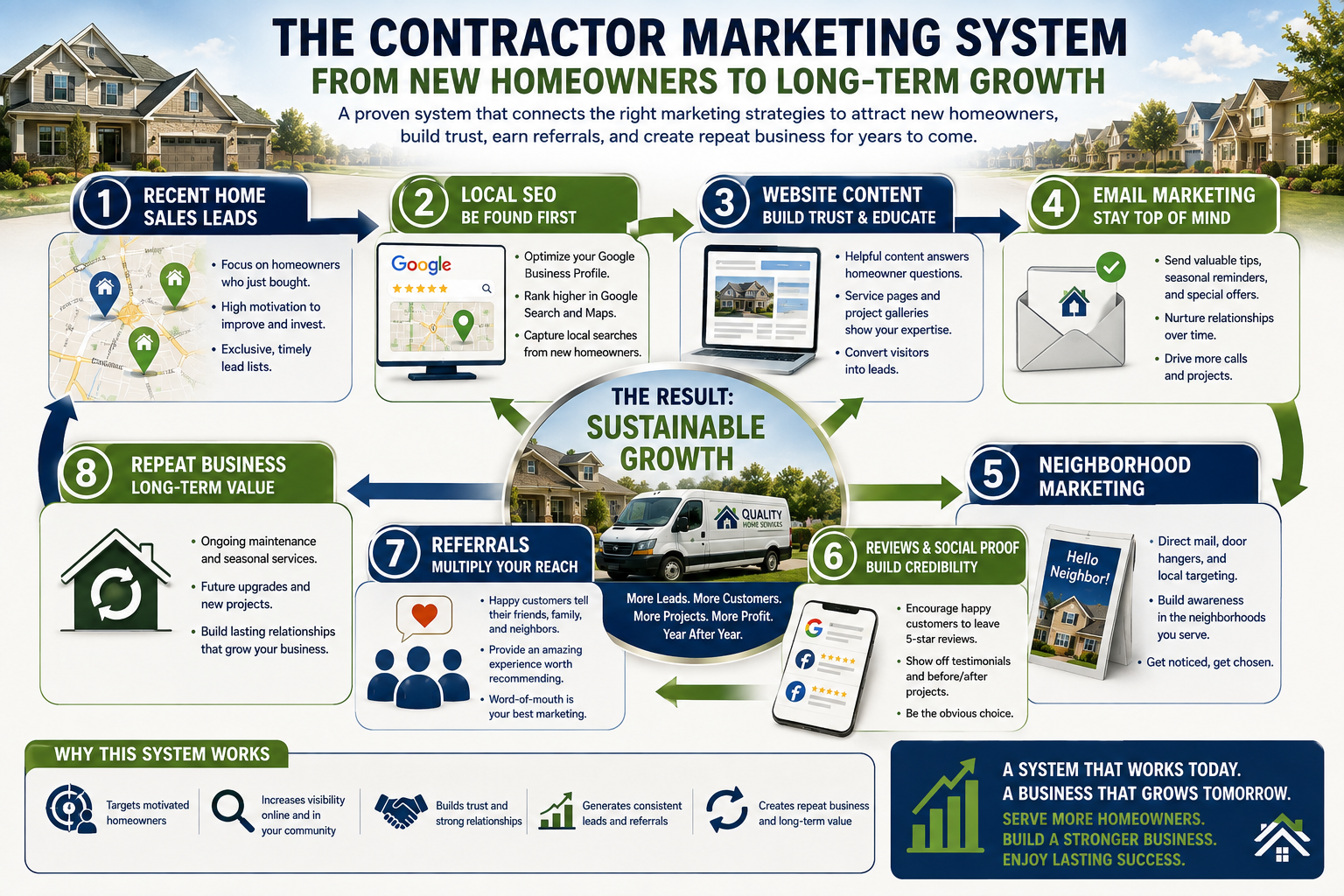
How Everything Works Together
Each marketing strategy strengthens the others.
A homeowner may:
- Receive your postcard.
- Search Google for your company.
- Read your reviews.
- Visit your website.
- Read a helpful blog article.
- Join your email list.
- Schedule service.
- Leave a five-star review.
- Refer friends and neighbors.
- Become a repeat customer.
That journey is what creates sustainable business growth.
Frequently Asked Questions
Which marketing strategy works best for contractors?
There is no single marketing strategy that works best for every contractor. Strong contractor marketing usually combines multiple channels, such as local SEO, direct mail, referrals, online reviews, neighborhood marketing, and customer follow-up.
How long does local SEO take?
Local SEO usually takes time to build. Some businesses may see improvements within a few months, while competitive markets can take longer. Consistent website optimization, helpful content, reviews, accurate business information, and a strong Google Business Profile can improve results over time.
Should contractors market to new homeowners?
Yes. New homeowners often make decisions about repairs, maintenance, improvements, security, landscaping, cleaning, and other home services soon after purchasing a property.
Same Day Home Sales provides the new homeowner’s name and property address, updated daily, so contractors and home service businesses can introduce themselves through timely direct-mail marketing.
Is email marketing still effective for contractors?
Yes. Email marketing can help contractors stay connected with customers and prospects who have provided their email address and permission to receive communications. Educational content, seasonal reminders, service updates, and special offers can encourage repeat business and referrals.
Why is customer retention important?
Existing customers already know your business and the quality of your work. Maintaining those relationships can lead to repeat projects, referrals, positive reviews, and greater customer lifetime value.
Final Thoughts
Successful contractor marketing isn’t about finding one perfect tactic. It’s about building a coordinated system that attracts homeowners, earns their trust, converts opportunities into customers, and encourages repeat business and referrals.
When your marketing strategies support one another, your business can build stronger visibility, generate better opportunities, and create more sustainable long-term growth.
Related Resources
Continue building a complete marketing system with strategies designed to help contractors attract new homeowners and develop long-term customer relationships.
Learn how Recent Home Sales Leads can help your business identify recent homebuyers and introduce your services earlier.
Strengthen your online visibility with Local SEO for Contractors and learn how your website, Google Business Profile, reviews, and local search presence work together.
Use Email Marketing to stay connected with homeowners after they have provided permission to receive email communication.
Explore Neighborhood Marketing for strategies that help contractors build recognition in the communities they serve.
Learn how Customer Lifetime Value can help you turn one successful project into repeat business, referrals, and long-term revenue.
Review Marketing ROI to measure campaign performance and identify which marketing strategies produce the strongest return.