
New Homeowner Marketing: 7 Powerful Ways to Generate Contractor Leads
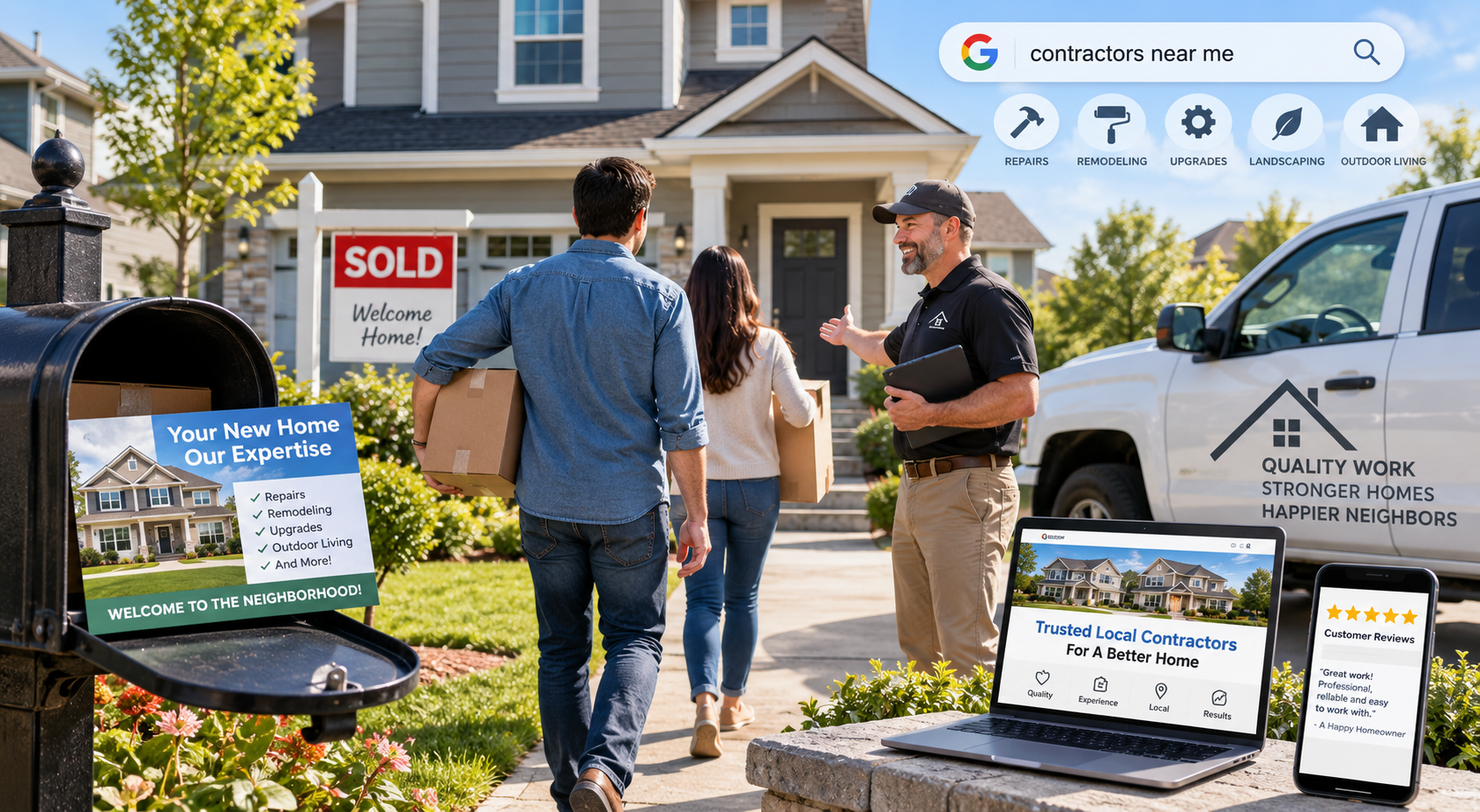
New homeowner marketing gives contractors a way to reach potential customers before they are actively searching for a service. When someone purchases a home, they may soon begin planning repairs, maintenance, upgrades, remodeling, landscaping, or other projects.
Instead of relying entirely on homeowners to find your company after a need develops, contractors can build a lead generation system that introduces the business earlier and keeps it visible until the homeowner is ready to act.
The most effective approach combines targeted homeowner information, direct mail, local search visibility, reviews, useful content, and consistent follow-up.
Why New Homeowner Marketing Matters
A new homeowner is not automatically a customer. However, purchasing a home can create new decisions and new service needs.
A homeowner may want to update a property, repair something discovered during the move, improve the yard, replace an aging system, or simply make the house feel more like home.
Those needs do not all happen at the same time. That is why contractors can benefit from building awareness before the homeowner is ready to hire someone.
The objective is not to assume what every homeowner needs. It is to make your company easy to remember when a need does arise.
Build a New Homeowner Marketing System Around Timing
A strong homeowner marketing system connects several steps instead of treating every mailing, website visit, or inquiry as a separate activity.
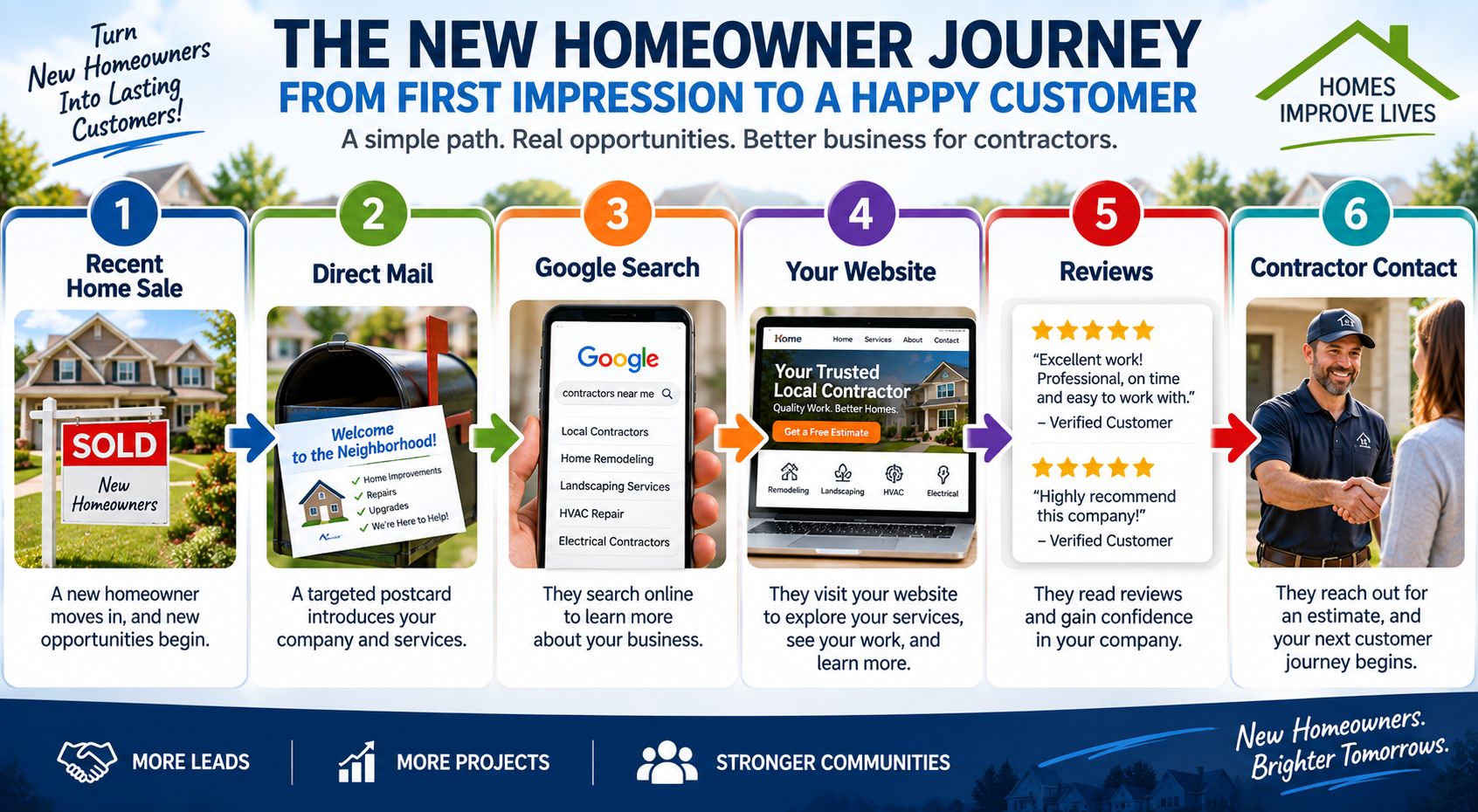
A homeowner might first receive a postcard after purchasing a property. Later, that homeowner may search for the company on Google, visit the website, read reviews, and eventually request an estimate.
Each interaction can reinforce the previous one.
That creates a simple marketing path:
Recent Home Sale → Targeted Outreach → Google Search → Website → Reviews → Contact → Customer
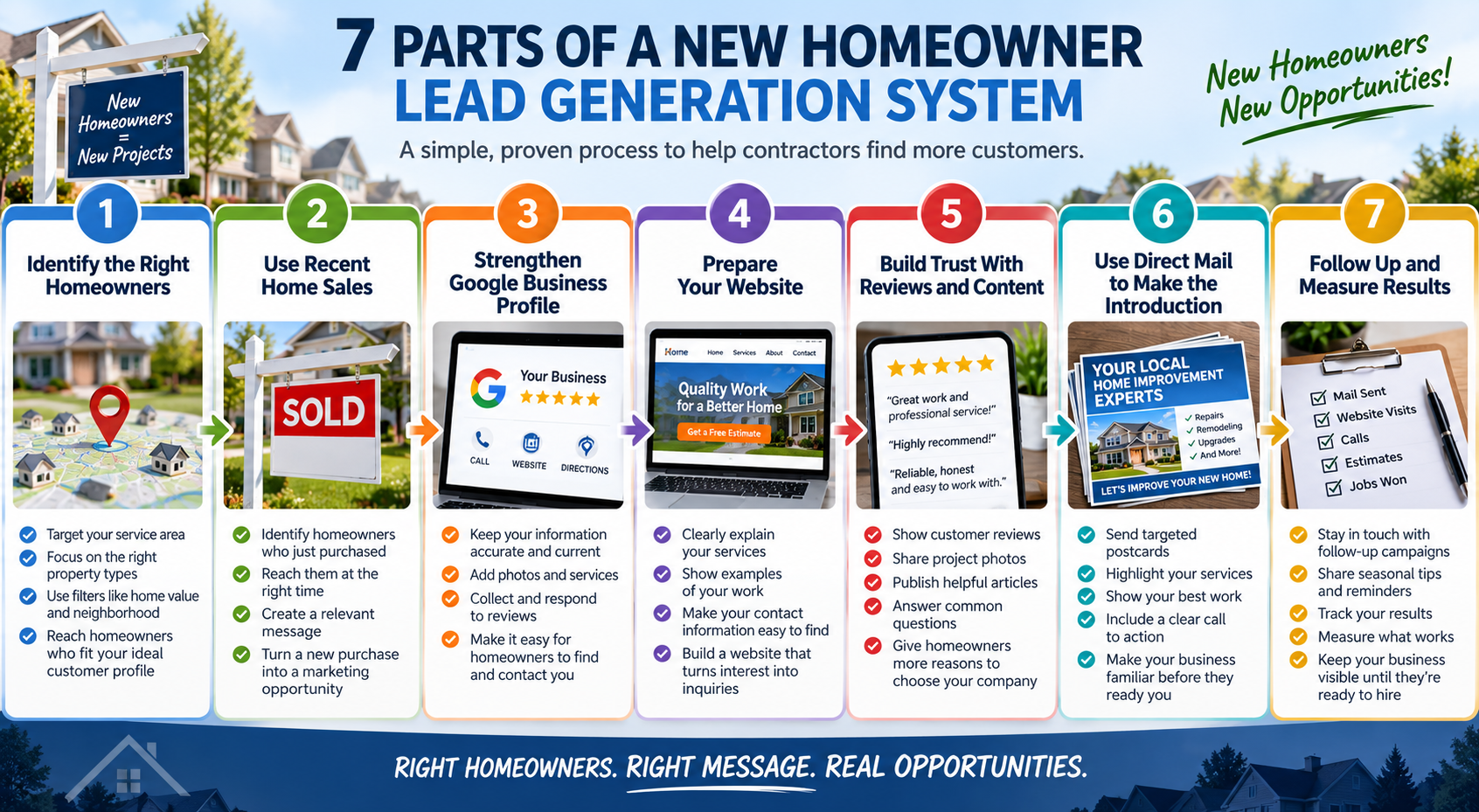
7 Parts of a New Homeowner Lead Generation System
1. Identify the Right Homeowners
Start with the homeowners you actually want to reach.
Contractors can define their target market by service area, property type, neighborhood, home value, recent purchase activity, or other characteristics that are relevant to the business.
The more clearly you define the audience, the easier it becomes to create a focused marketing campaign instead of sending the same message to everyone.
2. Use Recent Home Sales as a Marketing Trigger
Recent home sales can provide a useful starting point for identifying people who have recently purchased properties in the areas you serve.
For a contractor, a recent purchase can be a useful marketing trigger because the homeowner has just taken responsibility for a property and may begin evaluating projects and services.
That does not mean every new homeowner is ready to buy. It means the purchase gives you a reason to introduce your company at a relevant time.
For contractors interested in reaching recent homebuyers, Recent Home Sales Leads can become part of a broader marketing strategy that combines targeted homeowner information with direct mail.
3. Strengthen Your Google Business Profile
A homeowner who sees your company in a postcard or other marketing may search for you on Google before making contact.
Keep your Google Business Profile accurate and current, including your business information, phone number, website, service area, hours, services, photos, and customer reviews.
Our Google Business Profile for Contractors guide explains how contractors can strengthen this part of their local marketing.
4. Make Your Website Ready for the Next Step
Once a homeowner receives your marketing, they may look you up online.
Your website should quickly answer the questions a prospective customer is likely to have:
- What services do you provide?
- Where do you work?
- What types of projects do you handle?
- How can I contact you?
- Can I see examples of your work?
- What do your customers say about you?
Your website should make it easy for someone who has just received your marketing to move from awareness to research.
5. Use Reviews and Content to Build Confidence
New homeowners may research several contractors before deciding whom to contact.
Customer reviews, project photos, service pages, helpful articles, and clear contact information can give prospective customers more reasons to continue researching your company.
Useful content can also answer questions before a homeowner ever speaks with a salesperson. That makes content marketing a supporting part of the lead generation system rather than a separate activity.
6. Use Direct Mail to Make the Introduction
Direct mail gives contractors a way to put their company directly in front of a targeted homeowner.
Instead of sending a generic advertisement to every household in an area, contractors can use targeted homeowner information to create more relevant campaigns.
A postcard can introduce the business, explain the services offered, show examples of completed work, and provide an easy way to get in touch.
The first mailing does not have to close the sale. Its job can simply be to make the contractor familiar before the homeowner needs the service.
7. Follow Up and Measure the Results
One contact is not always enough. A homeowner may see your postcard but not need a service for several weeks or months.
Follow-up can keep the company visible without overwhelming the homeowner. Useful reminders, seasonal information, project ideas, and service information can provide reasons to stay in touch.
Track the results of each campaign. Record the area targeted, number of homeowners contacted, calls, website inquiries, estimates, and jobs won.
The goal is to learn which campaigns actually create opportunities for the business.
Match Your Message to New Homeowner Marketing
New homeowner marketing works best when the message reflects the services you actually provide.
A plumber might focus on inspections, water heaters, fixtures, or repairs.
An electrician might highlight lighting, electrical upgrades, inspections, or outlets and switches.
An HVAC contractor might focus on maintenance, repairs, system evaluations, or equipment replacement.
A landscaper might promote yard cleanup, irrigation, landscaping, or outdoor improvements.
A remodeling contractor might focus on kitchens, bathrooms, flooring, painting, or larger renovations.
The message should give the homeowner a clear reason to remember your company without assuming that every new homeowner needs the same service.
Combine Online and Offline Marketing
New homeowner lead generation does not have to be an either-or decision between direct mail and digital marketing.
The two can work together.
A postcard can create awareness. Google can help the homeowner find your company. Your website can explain your services. Reviews can provide additional information about your business. A follow-up campaign can keep your company in front of the homeowner.
When these pieces support one another, the homeowner has several opportunities to encounter the business before making a decision.
Turn New Homeowner Marketing Into an Ongoing Process
The biggest mistake contractors can make with homeowner marketing is treating it as a single event.
Homeowners make decisions at different times. One person may start a project immediately after moving in, while another may wait several months.
An ongoing marketing system allows contractors to stay visible while homeowners move through those decisions.
That can mean using new homeowner lists regularly, maintaining an active website, collecting reviews, publishing useful information, and following up with prospects in a way that provides value.
The goal isn’t to contact someone repeatedly with the same sales pitch. It is to remain recognizable and useful until the homeowner has a reason to contact you.
Frequently Asked Questions
What is new homeowner marketing?
New homeowner marketing is the process of introducing a business to people who have recently purchased homes and may eventually need the services the business provides.
Why should contractors market to new homeowners?
A home purchase can lead to repairs, maintenance, remodeling, landscaping, and other property decisions. Marketing early gives contractors an opportunity to become familiar before the homeowner is actively comparing providers.
Can recent home sales help contractors generate leads?
Recent home sales can help contractors identify homeowners who recently purchased properties in their service areas. Those homeowners can then be included in targeted marketing campaigns.
Is direct mail still useful for new homeowner marketing?
Direct mail can be useful when contractors want to reach a defined group of homeowners with a physical introduction. It can also work alongside online marketing and follow-up.
How should contractors measure new homeowner marketing?
Track the homeowners contacted, geographic area, campaign date, responses, website inquiries, estimates, and jobs won. This helps identify which campaigns are producing actual business opportunities.
Final Thoughts
New homeowner marketing is most effective when it is treated as a system rather than a single advertisement.
Identify the right homeowners, reach them at a relevant time, introduce your company, make your online presence easy to find, build trust through reviews and useful content, and follow up consistently.
Recent home sales can provide the starting point for that process by helping contractors identify homeowners who have recently purchased properties in the areas they serve.
When targeted homeowner information and thoughtful marketing work together, contractors can create more opportunities to be considered before a homeowner has already chosen someone else.